Luxembourg Central Station is the most pleasant railway station I have had the opportunity to visit so far. It is small, intimate, and feels safe. You can buy a good coffee and a croissant here, for example at Oberweis, a well-known Luxembourgish bakery and pâtisserie that impressed me many years ago with its selection of beautifully decorated and delicious pastries.
I have been crossing the station’s main hall for years, but I am usually in a hurry to catch my train, leaving me little time to notice the details of its interior.
Today was different. I had more time, so I stopped in front of the departure board. I looked up, and my gaze settled on the stained-glass window that I had seen hundreds of times before but had never really paid attention to. It is, in fact, a truly beautiful piece. Today, the sunlight illuminated it, and the magnificent silhouette of Luxembourg shone into the hall, drawing the eye of everyone who paused, even for a moment, in the midst of their busy day.
***
Dworzec Główny w Luksemburgu jest dla mnie najprzyjemniejszym dworcem kolejowym, jaki do tej pory miałam okazję zobaczyć. Jest niewielki, kameralny i sprawia wrażenie bezpiecznego. Można tu kupić dobrą kawę i croissanta, na przykład w Oberweisie – znanej luksemburskiej piekarni i cukierni, która wiele lat temu zachwyciła mnie wyborem przepięknie udekorowanych, pysznych ciastek. Halę główną tego dworca przemierzam od lat, zazwyczaj jednak spieszę się, aby zdążyć na pociąg, więc nie mam czasu przyglądać się detalom wystroju.
Dziś było inaczej. Miałam więcej czasu, więc zatrzymałam się przed tablicą odjazdów. Spojrzałam w górę i mój wzrok zatrzymał się na witrażu, który widziałam już setki razy, ale któremu nigdy wcześniej nie poświęciłam większej uwagi. A to naprawdę piękny witraż. Dziś słońce rozświetliło go i przepiękna sylwetka Luksemburga promieniowała do wnętrza budynku i przyciągała wzrok każdego, kto choć na chwilę zatrzymał się w biegu.

I became curious about the history of this stained-glass window. When was it created? Who designed and crafted it? I decided to do some research, and this is what I discovered.
The stained-glass window was created in 1951, during the period of Europe’s reconstruction after the Second World War. It was the result of a collaboration between several individuals and institutions: the Luxembourgish art-glass workshop of the Linster brothers from Mondorf-les-Bains, the painter Frantz Kinnen (1905–1979), the Belgian advertising artist Michel Ungeheuer, director of the agency Publicité Reclam, and a number of commercial partners. The project was carried out with the support of Belgopharma and Bayer and in cooperation with Luxembourg’s national railway company, CFL.
The work was impressive in scale. Covering an area of approximately 30 square metres, it consisted of 220 panels and nearly 2,000 pieces of coloured glass held together by 160 kilograms of lead.
A railway station has always been a place of meetings, departures, and homecomings. From here, journeys began to neighbouring countries and to more distant corners of Europe. The stained-glass window, through which light pours into the building, becomes a symbolic window connecting the city with the rest of the continent. Its depiction of Luxembourg’s skyline serves as a reminder of the local identity to which we return, while at the same time inviting us to look beyond the city’s borders.
***
Zaciekawiła mnie historia tego witraża. Kiedy powstał? Kto go zaprojektował i wykonał? Postanowiłam poszukać informacji i oto, co udało mi się znaleźć.
Witraż powstał w 1951 roku, w okresie odbudowy Europy po II wojnie światowej. Był efektem współpracy kilku osób i instytucji: luksemburskiego warsztatu szkła artystycznego braci Linster z Mondorf-les-Bains, malarza Frantza Kinnena (1905–1979), belgijskiego artysty reklamy oraz Michela Ungeheuera, dyrektora agencji Publicité Reclam. Projekt został zrealizowany przy wsparciu firm Belgopharma i Bayer oraz we współpracy z luksemburskimi kolejami CFL.
Dzieło miało imponujące rozmiary. Zajmowało powierzchnię około 30 metrów kwadratowych, składało się z 220 paneli i blisko 2000 kawałków kolorowego szkła połączonych 160 kilogramami ołowiu.
Dworzec kolejowy od zawsze był miejscem spotkań, wyjazdów i powrotów. To stąd rozpoczynały się podróże do sąsiednich krajów i dalszych zakątków Europy. Witraż, przez który światło przenika do wnętrza budynku, staje się symbolicznym oknem łączącym miasto z resztą kontynentu. Przedstawiona w nim panorama Luksemburga przypomina o lokalnej tożsamości, do której wracamy, ale jednocześnie zachęca do spojrzenia poza granice miasta.

https://www.industrie.lu/im/i/g/VitrailGareLuxembourg19510526RevueJMO.jpg
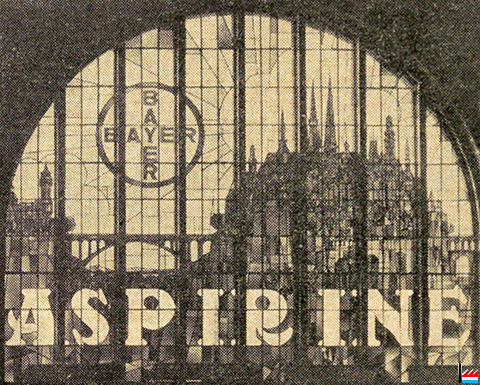
One of the most fascinating aspects of this work’s history is that it originally contained advertising elements. The composition included references to Bayer’s Aspirin, with the product’s name and symbols artistically woven into the colourful structure of the stained glass. Today, this may seem surprising, but in the 1950s such combinations of art and advertising were regarded as a sign of modernity. Sponsors financed ambitious artistic projects, and their presence in public spaces did not provoke the same controversy it often does today.
Over time, however, attitudes towards the preservation of cultural heritage changed. During later restoration work, the advertising elements associated with Bayer were removed, leaving only the artistic composition itself. As a result, contemporary viewers can focus on the work’s aesthetic qualities and historical significance, rather than perceiving it as a vehicle for commercial promotion.
Today, the stained-glass window is much more than a decoration of the station. It stands as a testament to post-war optimism, the growth of rail transport, and a belief in progress and modernity. It is also an example of how our expectations of art in public spaces evolve over time. For more than seventy years, this work has watched over millions of travellers, remaining a silent witness to the history of the city.
Filled with light and colour, it remains a symbolic window—a window into the city for those who have just arrived, and a window onto the world for those who are only beginning their journey.
***
Jednym z najbardziej interesujących aspektów historii tego dzieła jest fakt, że pierwotnie zawierało ono elementy reklamowe. W kompozycji znajdowały się odniesienia do produktu Aspirine firmy Bayer, którego nazwa i symbole zostały artystycznie wkomponowane w kolorową strukturę szkła. Dziś może to wydawać się zaskakujące, jednak w latach pięćdziesiątych podobne połączenia sztuki i reklamy były postrzegane jako przejaw nowoczesności. Sponsorzy finansowali ambitne realizacje artystyczne, a ich obecność w przestrzeni publicznej nie budziła takich kontrowersji jak współcześnie. Z biegiem czasu zmieniło się jednak podejście do ochrony dziedzictwa kulturowego. Podczas późniejszych prac renowacyjnych usunięto elementy reklamowe związane z Bayerem, pozostawiając samą wartość artystyczną kompozycji. Dzięki temu współczesny widz może skupić się na estetyce dzieła i jego historycznym znaczeniu, nie odczytując go już jako nośnika reklamy.
Dziś witraż jest czymś więcej niż ozdobą dworca. Stanowi świadectwo powojennego optymizmu, rozwoju transportu kolejowego i wiary w nowoczesność. Jest również przykładem tego, jak zmieniają się nasze oczekiwania wobec sztuki w przestrzeni publicznej. To dzieło, które przez ponad siedemdziesiąt lat obserwowało miliony podróżnych, pozostając milczącym świadkiem historii miasta.
Wypełnione światłem i kolorem, pozostaje symbolicznym oknem – oknem do wnętrza miasta dla tych, którzy właśnie przybyli i oknem na świat dla tych, którzy dopiero rozpoczynają swoją podróż.
źródła:
https://www.industrie.lu/LinsterMondorf.html
https://www.vitraux.lu/fr/atelier.html
https://collections.mnaha.lu/